Why Some New Projects Are Sold Below Market Value?
Hajar Abdullah
March 4th, 2026
Have you ever wondered why some brand-new property launches seem to be priced at an absolute steal? Finding a property below market value is the “holy grail” for Malaysian investors, but it often feels like a glitch in the matrix.
Why would a developer, whose primary goal is profit, sell a unit for less than what the surrounding area dictates?
In this article, we will break down the mechanics of the real estate industry to explain why below market value deals exist in the primary market and how you can capitalize on them before the general public catches on.
Understanding the Concept of Below Market Value
To understand why a new project might be below market value, we first need to define the “Market Value.” Typically, this is the estimated amount for which an asset should exchange on the date of valuation between a willing buyer and a willing seller.
In the context of new projects (under-construction or newly completed), being below market value usually means the entry price is significantly lower than the transacted prices of comparable completed properties in the immediate vicinity.
If a 10-year-old condo next door is selling for RM600 per square foot, and a brand-new project is launching at RM520 per square foot, you are looking at a prime below market value opportunity.
The Developer’s Liquidity Crunch
Property development is a capital-intensive business. Developers often take massive loans (bridging loans) to fund construction. These loans come with high interest rates.
The Cash Flow Race
Sometimes, a developer needs to hit a specific sales quota to unlock the next tranche of funding from the bank. If sales are sluggish, they may offer units below market value to trigger a surge in volume. For the developer, losing a small margin on 20 units is better than stalling the entire project and paying millions in interest.
Year-End Targets
Public-listed developers need to show strong “Sales Performance” in their annual reports to keep shareholders happy. This often leads to “Year-End Bonanzas” where prices are slashed to below market value levels just to “flush” the remaining inventory and beef up the books.
Unsold “Bumi” Quota Releases
In Malaysia, a certain percentage of units must be reserved for Bumiputera buyers, often at a discount. If these units remain unsold after a specific period, the developer can apply for a “Bumi Quota Release.”
To clear this “stale” stock quickly, developers might offer these released units at a massive discount to non-Bumi buyers as well, effectively placing them below market value. These are often “ready-to-move-in” units, which minimizes the risk of construction delays.
Bulk Purchase Agreements
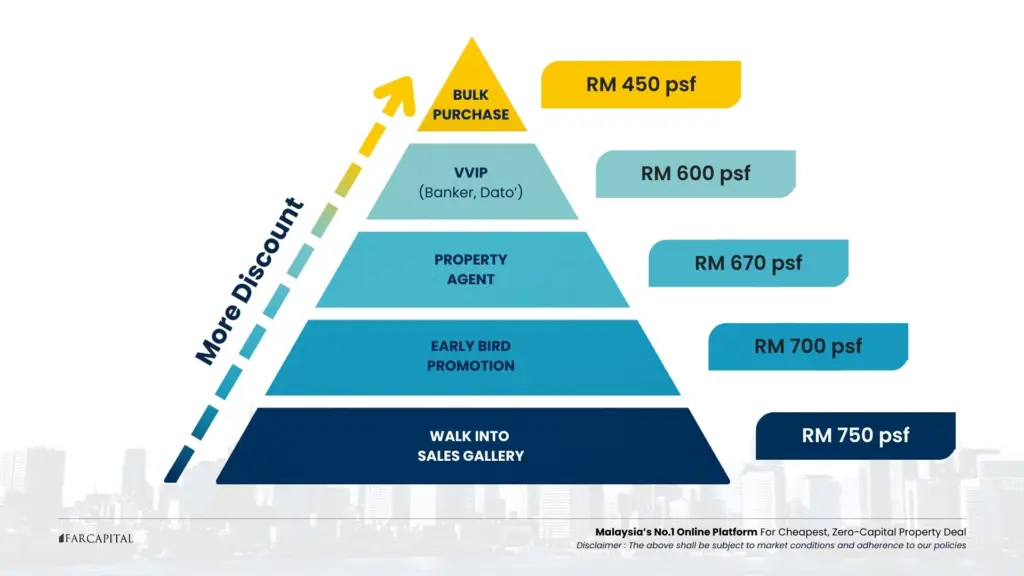
This is where entities like FAR Capital thrive. When a group of investors buys 50 or 100 units at once, the developer saves a fortune on marketing, gallery maintenance, and sales commissions.
Wholesale vs Retail
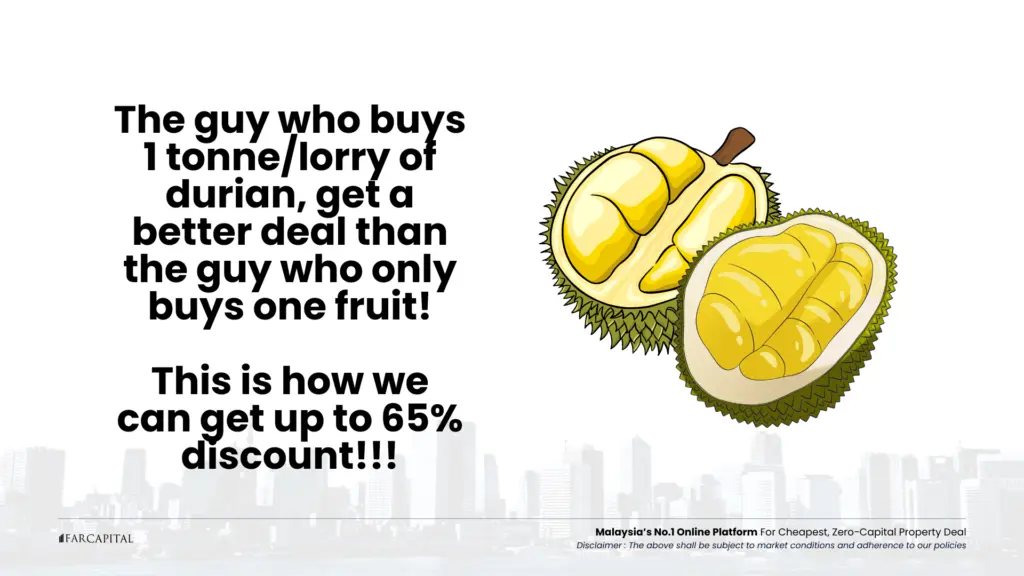
Think of it like buying groceries. If you buy one apple, you pay the retail price. If you buy a crate, you get the wholesale price. By participating in bulk purchases, individual investors can secure a unit below market value because the developer is passing the marketing savings directly to the buyer.
Pro Tip: Always look for “Phase 1” launches. Developers intentionally price the first phase below market value to create hype. By the time Phase 3 launches, the price has usually appreciated by 15-20%.
Identify Genuine Below Market Value Deals
Not every “cheap” property is a good deal. To ensure you are truly buying below market value, follow this checklist:
#1 – Check JPPH Data: Use the Brickz.my portal to see actual transacted prices in the area. Don’t rely on asking prices from listing sites.
#2 – Analyze the Per Square Foot (PSF) Price: Compare the PSF of the new project against 5-year-old condos in the same radius.
#3 – Evaluate the Developer’s Track Record: A low price from a bankrupt developer isn’t a deal; it’s a trap.
#4 – Calculate the Net Price: Subtract all rebates, cashbacks, and freebies from the SPA price to find the true below market value figure.
The Math Behind the Deal
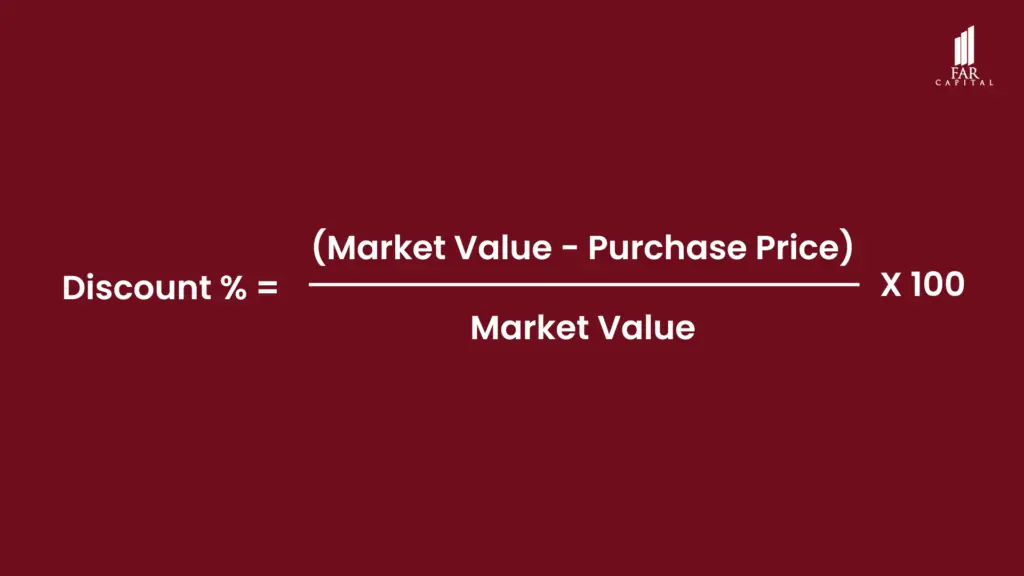
To find the percentage below market value, use this simple formula:
If the result is >15%, you are likely looking at a high-potential investment.
Conclusion: Is It Too Good To Be True?
Buying below market value is not a myth, but it requires strategy. Developers aren’t giving away money; they are exchanging a lower price for your early commitment or for the speed of a bulk transaction. By understanding these secrets, you can stop being a “retail” buyer and start investing like a pro.
The Malaysian property market in 2026 is full of opportunities for those who know where to look. Whether it’s through liquidity-strapped developers or strategic bulk purchases, your path to wealth starts with that first below market value acquisition.