
Asset poverty is a silent financial disease destroying the wealth-building potential of many Malaysians. You might earn a high monthly income, but if you stop working today, how long can you survive?
For many in the M40 (Middle 40%) income group, the answer is terrifying. They look rich on the outside, but they own zero income-producing assets on the inside.
In this comprehensive guide, we will uncover why a stable salary often leads to disaster, and how to completely avoid asset poverty.
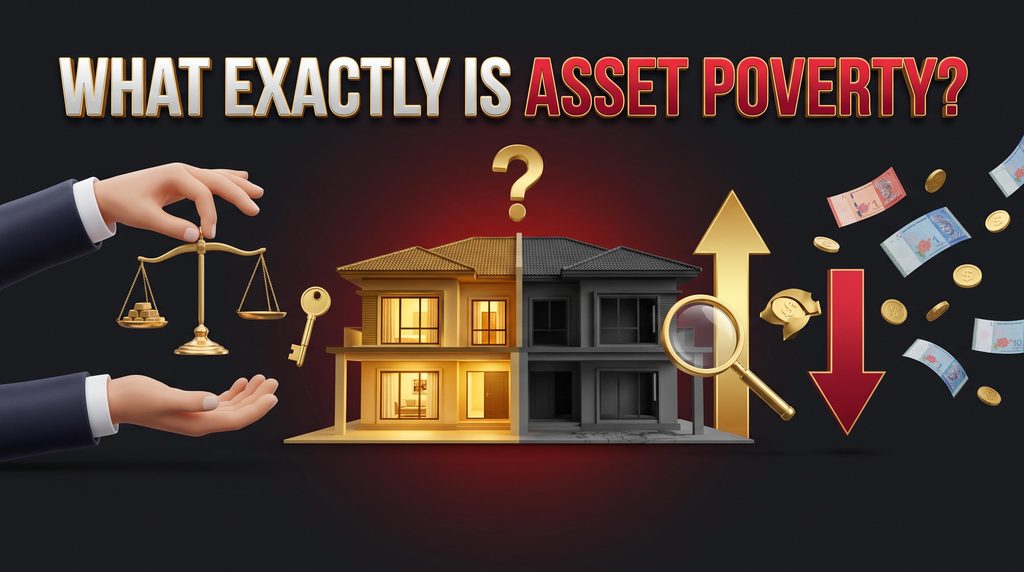
When we hear the word “poverty,” we usually imagine someone with no income, struggling to buy food. However, asset poverty is entirely different. It happens when an individual earns a comfortable, stable income but has accumulated zero net-worth.
If an emergency strikes, or if their salary stops tomorrow, they do not have enough assets like property, stocks, or liquid cash to sustain their lifestyle for even three months.
They are trapped in a cycle of earning money just to pay off bad debts. They might live in a luxury condominium and drive a premium continental car, but the bank essentially owns their entire life.
In Malaysia, the population is divided into three main income groups: the B40 (Bottom 40%), the M40 (Middle 40%), and the T20 (Top 20%). The M40 group typically earns roughly between RM4,800 to RM10,900 per month. By many standards, this is a very stable and respectable income.
Yet, reports from institutions like Bank Negara Malaysia (the Central Bank) continuously warn about high household debt.
Why is this happening? Because earning RM8,000 a month means nothing if your monthly bank commitments total RM7,500. This high-income, high-expense lifestyle is the textbook definition of asset poverty.
Key Insight: Income wealth is what you use to pay your bills today. Asset wealth is what pays your bills for the rest of your life. Focusing only on a salary will almost always lead to asset poverty.
If a stable income is supposed to provide financial security, why does it fail? Here are seven shocking reasons why an M40 salary often leads straight to asset poverty.
The moment an M40 earner gets a salary increase, their monthly commitments immediately go up. They upgrade their car, max out their credit cards, and take on unnecessary personal loans. These are all depreciating liabilities.
When a huge portion of your salary goes toward servicing bad debt, there is zero capital left to invest in real assets.
Malaysia has one of the highest car ownership rates in the world. Sadly, many M40 earners spend up to 30% of their monthly salary on car loans and maintenance.
Cars depreciate the moment you drive them out of the showroom. Over a 9-year loan period, pouring hundreds of thousands of ringgit into a depreciating metal box is a fast track to asset poverty.
Schools teach us how to work for money, but they do not teach us how to make money work for us. Many M40 earners have zero financial literacy. They do not know the difference between good debt (which buys income-producing property) and bad debt (which buys consumer goods). Without this vital education, they naturally drift toward financial ruin.
Renting is not inherently bad, but renting forever without building equity is dangerous. Many M40 individuals rent luxury apartments they cannot afford to buy. They pay RM2,500 a month to a landlord for 10 years, enriching someone else’s asset column. By refusing to buy a starter home or an investment property early, they guarantee their own asset poverty.
Social media has created a culture where looking rich is more important than being rich. M40 earners often fall victim to lifestyle inflation. Expensive weekend cafes, the latest smartphones, and luxury holidays eat up their disposable income. They prioritize short-term dopamine hits over long-term wealth accumulation.
Many people are terrified of taking on a 35-year mortgage. They think property investment is only for the ultra-rich T20 group. This fear paralyses them. They keep their money in low-yield savings accounts where inflation quietly destroys their purchasing power. Failing to leverage real estate is one of the main drivers of asset poverty.
A stable salary gives a false sense of security. Because the money comes in on the 25th of every month, M40 earners assume it will never stop.
They build no emergency funds and buy no cash-flowing properties. When a recession hits or retrenchment happens, their lack of assets leaves them completely exposed.
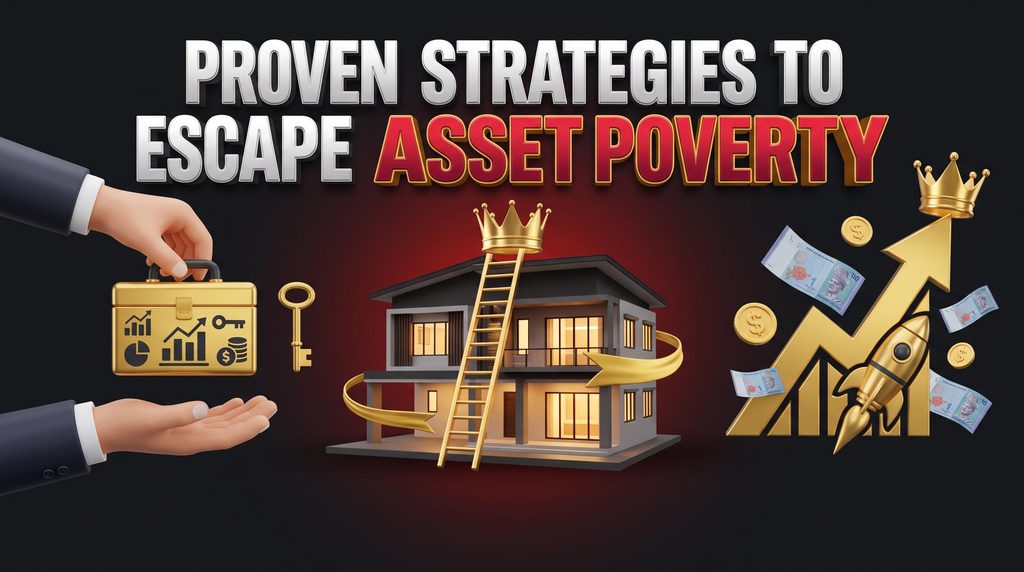
Escaping this trap requires a complete shift in mindset. You must transition from being a consumer to being an owner.
Step 1: Radically Reduce Bad Debt
Clear your personal loans and credit cards immediately. Downgrade your expensive car if necessary. You must free up your cash flow.
Step 2: Invest in Financial Education
Before buying any asset, invest in your brain. Join property investment communities to learn from experts who have already achieved financial freedom.
Step 3: Acquire Below Market Value (BMV) Properties
Do not buy properties from developers at highly inflated prices. Look for sub-sale or auction properties priced 20% to 30% below the actual market value. This creates instant wealth.
Step 4: Focus on Cash Flow
A property is only a good asset if it puts money into your pocket every month. Focus on properties with high rental yields that easily cover your monthly mortgage instalments.
Want to see exactly how this is done? Check out our exclusive Property Deals to start building your asset portfolio today.
To make the contrast crystal clear, let us look at the pros and cons of the typical M40 lifestyle compared to a dedicated asset-building strategy.
| The High Lifestyle Strategy (Asset Poverty) | The High Asset Strategy (Wealth Building) |
| PRO: Instant gratification and social status. | PRO: Generates passive income for life. |
| PRO: Living in trendy, expensive locations. | PRO: Protects wealth against inflation. |
| CON: One emergency away from bankruptcy. | CON: Requires delayed gratification. |
| CON: Zero assets to pass to your children. | CON: Requires time spent on financial education. |
| CON: Forced to work until old age. | PRO: Leads to early retirement and absolute freedom. |
Expert Tip: The pain of discipline today is much lighter than the pain of asset poverty tomorrow. Choose your pain wisely.
Conclusion
In today’s fast-paced economy, relying solely on your monthly salary is the most dangerous financial decision you can make. The illusion of a comfortable M40 income often masks the terrifying reality of asset poverty. High commitments, severe lack of financial literacy, and crippling lifestyle inflation are destroying the futures of thousands of hard-working people.
Whether you are a local Malaysian or a foreigner observing this market, the lesson is clear: you must aggressively acquire income-producing assets.
Real estate remains one of the most powerful, proven, and accessible vehicles to build generational wealth. By understanding the root causes of financial struggles, you can position yourself to make intelligent, wealth-generating decisions.
Stop working just to pay the banks. Start investing so the banks can work for you. It is time to cure asset poverty once and for all, and secure the financial freedom you truly deserve.
Asset poverty is an economic term defining individuals or households whose total assets are insufficient to cover their basic living expenses for a period of three months, should their primary income suddenly stop.
A high salary only dictates your cash inflow. If your cash outflow (commitments, debts, lifestyle) matches or exceeds your income, you are generating zero surplus capital. Wealth is measured by the assets you keep, not the salary you spend.
Yes, if you buy it incorrectly. If you purchase an overpriced home for your own stay and the mortgage consumes 50% of your salary, you become “house poor.” A home is only a good asset if it is bought below market value or generates rental income.
Calculate your total liquid assets and income-producing assets. If you lose your job today, how many months can you survive without changing your lifestyle? If the answer is less than three to six months, you are experiencing this financial crisis.
Yes, when done correctly. Real estate is an asset that provides capital appreciation and monthly rental cash flow. Over time, the tenant pays down your mortgage, leaving you with a fully paid-off asset that permanently ends your financial struggles.
You must surround yourself with people who understand the market intimately. Join professional networks, read credible financial blogs, and seek out proven mentorship programs that focus on heavy cash flow strategies.

